Cybersecurity Services: What They Cover and How to Prioritize
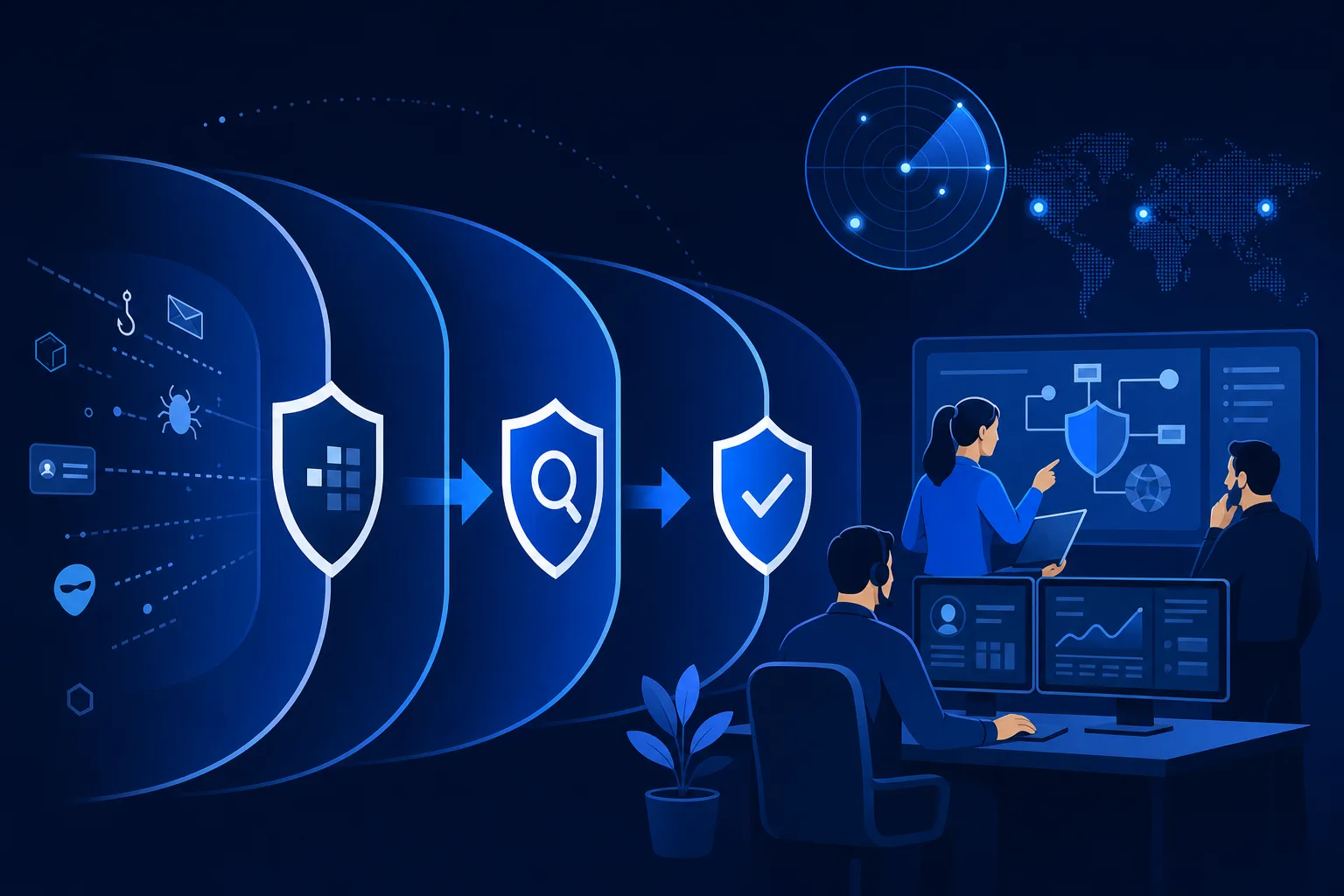
Cybersecurity services are the protections a business puts in place to defend its systems and data, from prevention like firewalls and training to detection and response when an attack gets through. The right mix depends on the risks a business actually faces.
Cybersecurity services in brief
- They span prevention, detection, and response.
- Priorities should follow the biggest real risks first.
- No single service is enough on its own; layers matter.
- Providers deliver them as ongoing managed services.
The categories of cybersecurity services
| Category | Examples |
|---|---|
| Prevent | Firewalls, email filtering, training, patching |
| Detect | Endpoint detection, monitoring, threat hunting |
| Respond | Incident response, containment, recovery |
| Govern | Risk assessment, compliance, policy |
How to prioritize
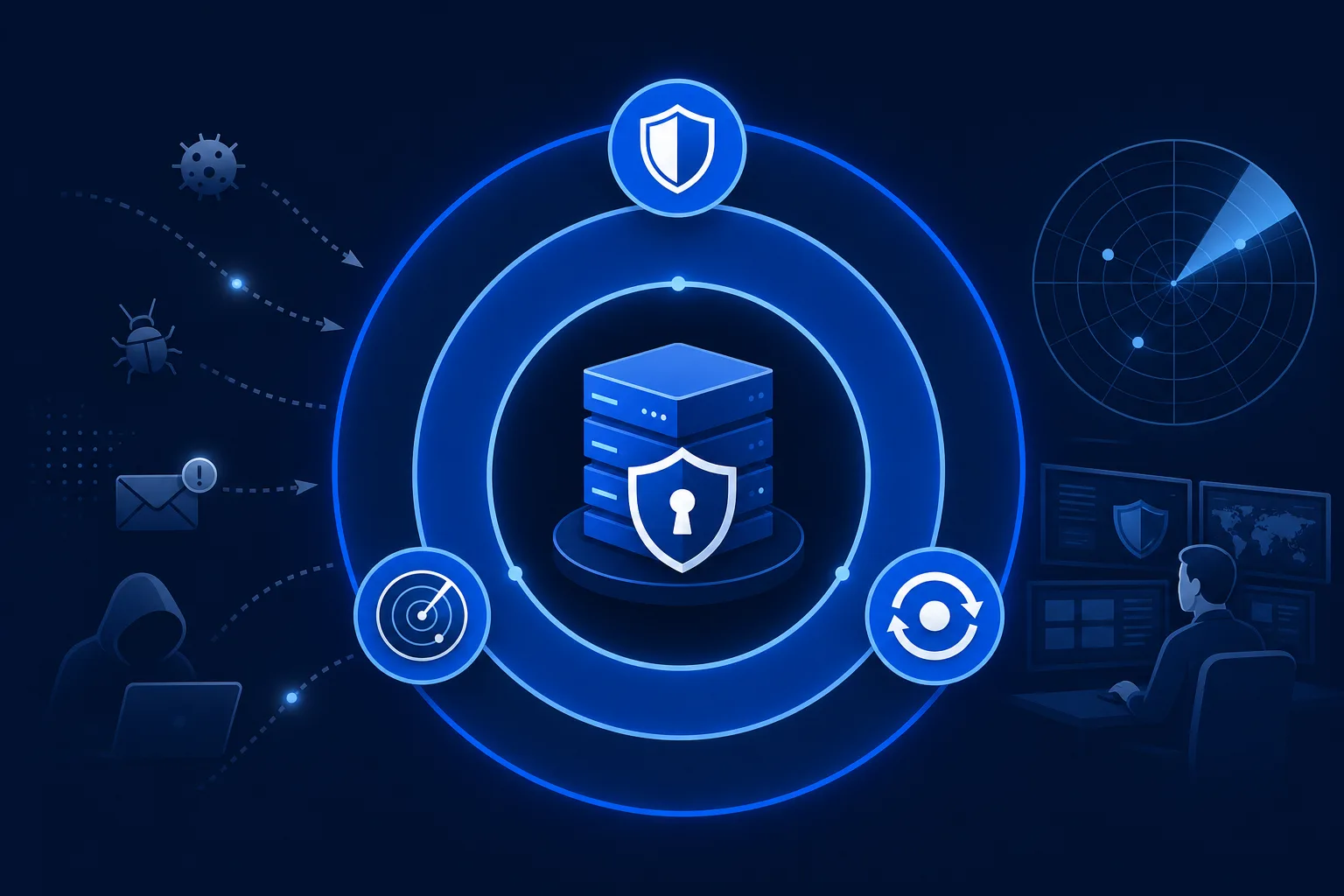
Not every business needs every service on day one. Start with the controls that address the most likely and most damaging risks: email security and training, because email is the top attack path; backups, because ransomware is common; and endpoint protection. Build from there based on a risk assessment.
Prevention is not enough
Every prevention layer eventually fails against a determined attacker. That is why detection and response matter: the goal is not just to keep attackers out, but to catch them fast and limit the damage when they get in. A balanced program invests in both.
How providers deliver cybersecurity services
Most businesses buy cybersecurity services from a provider who runs the tools and staffs the response, because doing it in-house requires people and expertise that are hard to hire. The provider spreads that capability across many clients.
Frequently asked questions
What are cybersecurity services?
They are the protections a business uses to defend systems and data, spanning prevention, detection, response, and governance.
Which cybersecurity services should I start with?
Begin with the highest-impact basics: email security and user training, reliable backups, and endpoint protection, then expand based on a risk assessment.
Can I handle cybersecurity in-house?
Some organizations can, but most lack the staff and expertise for 24/7 coverage, which is why cybersecurity services are commonly delivered by a provider.
Leave a Reply