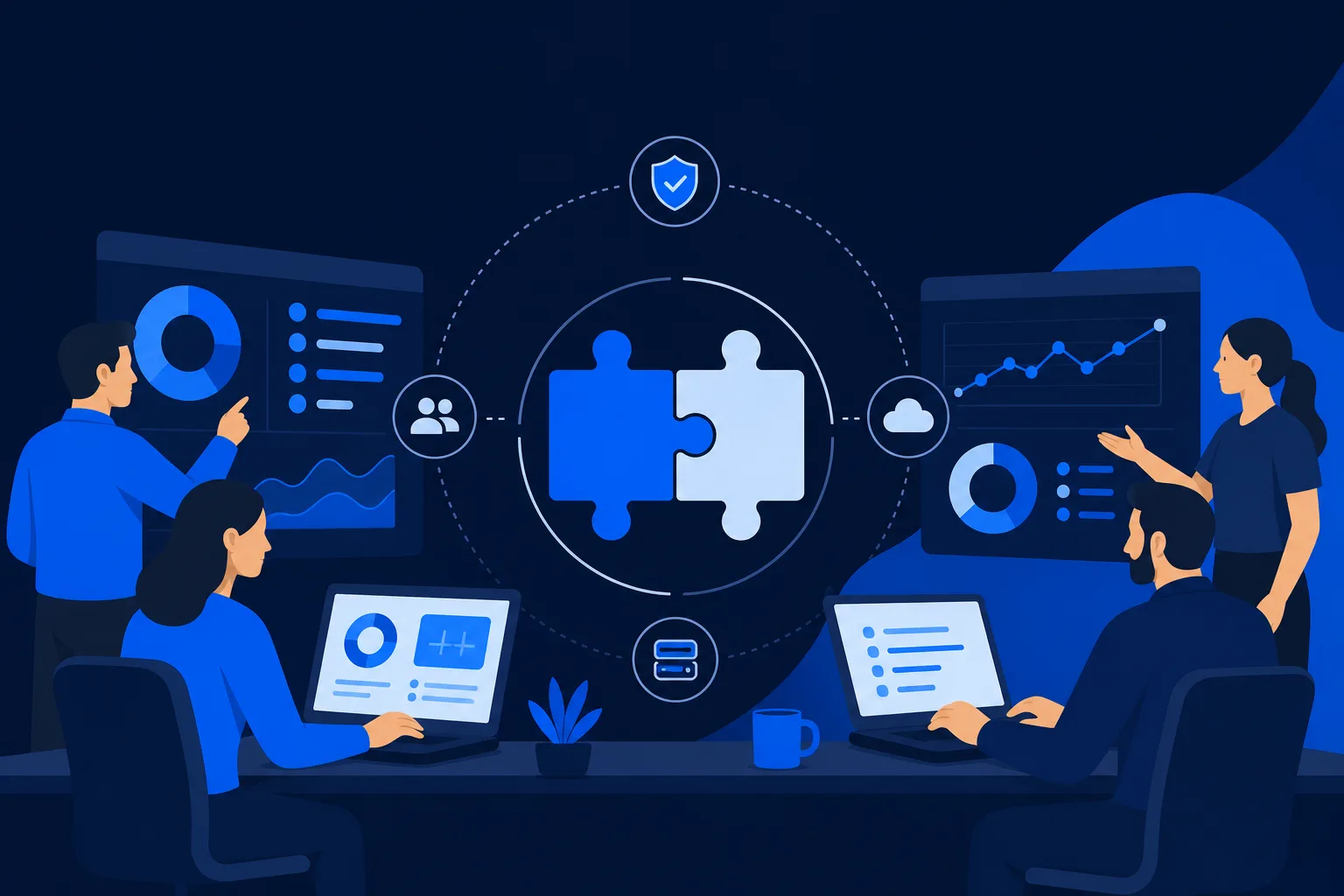
Co-Managed IT Services: Sharing the Load with an Internal Team
Co-managed IT services is a model where an internal IT team and an external provider share responsibility for a company’s technology. The internal team keeps the work it does best, and the provider fills gaps in coverage, skills, or tools.
The co-managed model at a glance
- It splits IT work between an internal team and a provider.
- The internal team keeps strategic and hands-on work; the provider fills gaps.
- It scales support without expanding headcount.
- Clear role definition is what makes it work.
What co-managed means in practice
Rather than replacing an internal team, co-managed IT services back it up. The provider might run the after-hours help desk, supply security tools the team cannot staff, or take on patching and monitoring while the internal staff focus on projects and users.
How responsibilities split
The split is negotiated, but common patterns include the provider owning monitoring, security operations, and after-hours coverage, while the internal team owns user relationships, strategy, and daily hands-on support. The key is writing down who owns what so nothing falls between the two.
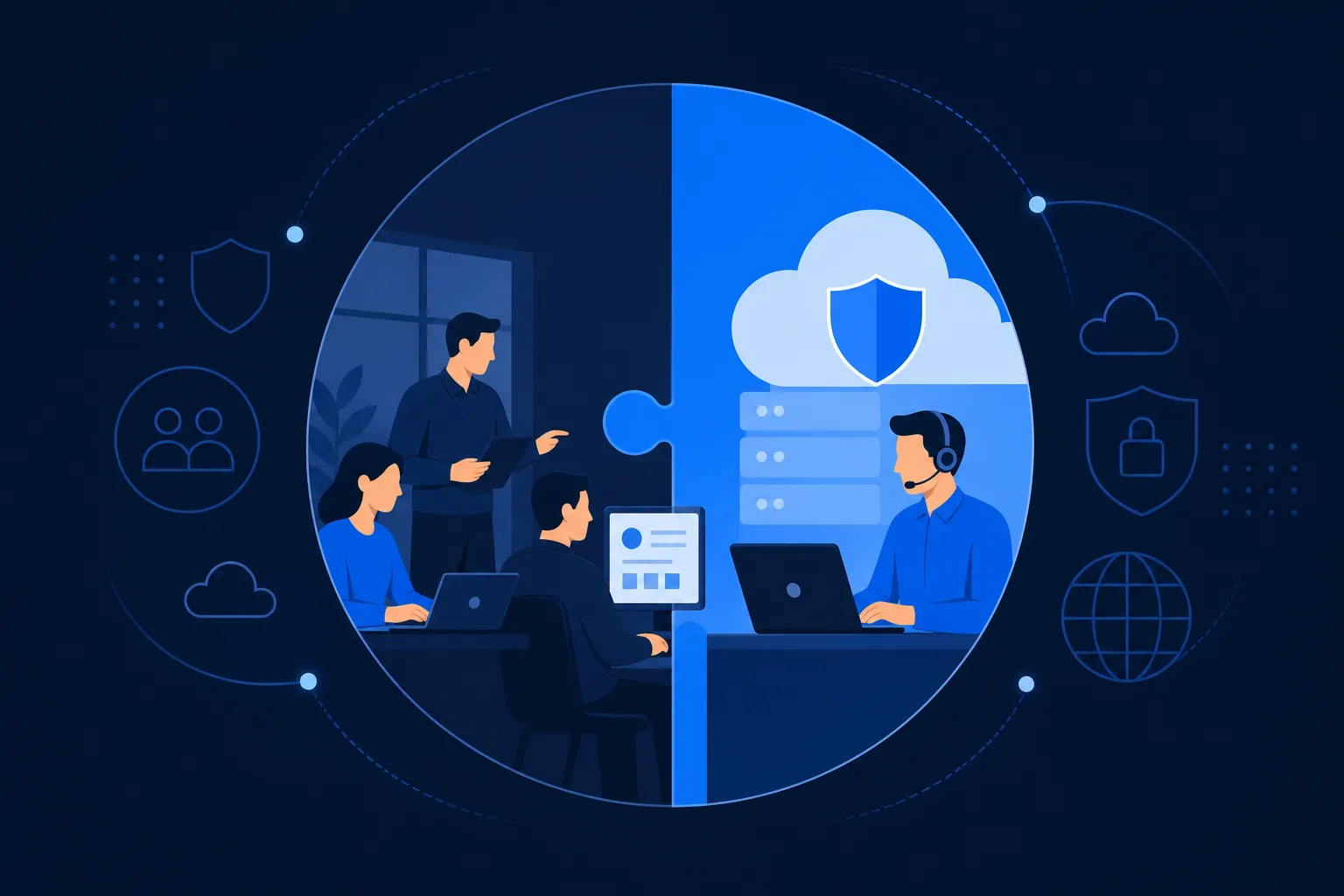
When co-managed beats full outsourcing
Co-managed fits firms that have a capable internal team but face gaps: not enough people for 24/7 coverage, missing security expertise, or a tool budget that is hard to justify for one company. It keeps institutional knowledge in-house while adding reach.
Making the partnership work
Shared tools, shared documentation, and regular check-ins keep both sides aligned. The failure mode is ambiguity about ownership, which leads to dropped tickets and finger-pointing. Define the boundaries up front.
Frequently asked questions
What is the difference between co-managed and fully outsourced IT?
Fully outsourced hands all IT to a provider; co-managed keeps an internal team and adds a provider to fill specific gaps.
Who is co-managed IT best for?
Firms that already have IT staff but need more coverage, specialized skills, or tools than the internal team can provide alone.
Does co-managed IT cause conflict with internal staff?
Not when roles are clearly defined. The model is designed to support internal teams, not replace them, which usually reduces their workload.
Leave a Reply