VoIP Systems: How to Choose One for Your Business in 2026
By The Uptime Report editorial team · Last updated September 2026
VoIP systems carry business calls over the internet instead of phone lines, and the market has decisively moved to them: over 60% of companies in developed markets have migrated to VoIP or cloud communications, cutting communication costs 30-50%.
Key takeaways
- Over 60% of companies in developed markets have migrated to VoIP systems.
- VoIP cuts communication costs 30-50% versus landlines, up to 68% on usage plans.
- Over 60% of SMBs use business VoIP as their primary voice platform.
- Hosted (cloud) systems remove hardware; on-premise suits specific control needs.
- Call quality depends on network bandwidth, latency, and QoS prioritization.
What are VoIP systems?
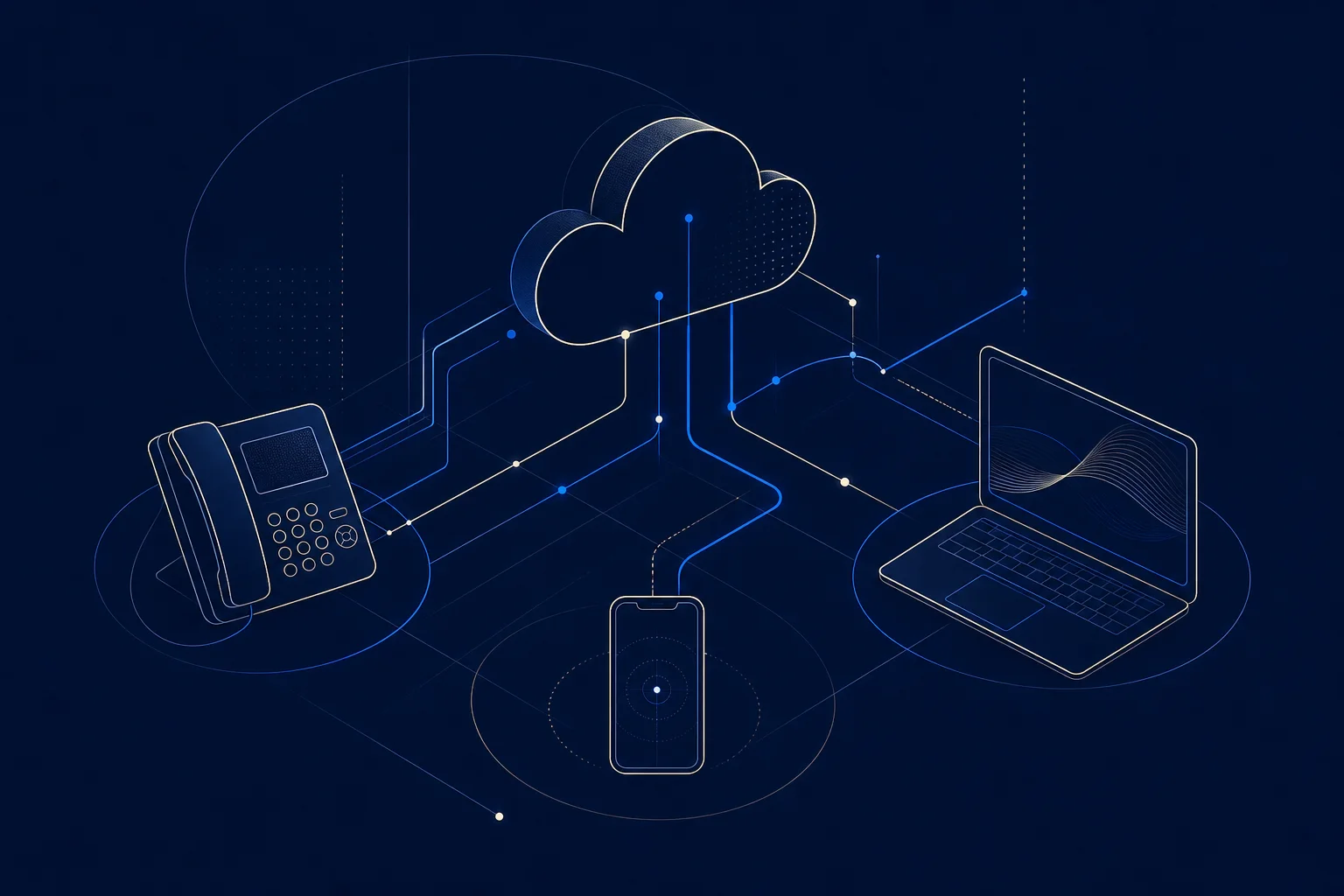
A VoIP system is a business phone system that carries calls over the internet instead of traditional copper lines. Your voice is converted to data, routed by a hosted or on-premise platform, and delivered to any phone number. The move to VoIP is nearly complete in developed markets: Panterra reports over 60% of companies have migrated, and over 60% of SMBs use business VoIP as their primary voice platform.
Hosted versus on-premise VoIP systems
| Hosted (cloud) | On-premise | |
|---|---|---|
| Hardware | None to own | You buy and maintain it |
| Cost | Per user, monthly | Upfront plus maintenance |
| Scaling | Instant | Provision hardware |
| Best for | Most businesses | Specific control/compliance needs |
Most businesses choose hosted VoIP for lower cost, instant scaling, and provider-managed maintenance.
How much do VoIP systems cost?
VoIP systems are billed per user per month, and the savings over legacy lines are consistent: businesses report 30% to 50% lower communication costs, up to 68% on usage-based plans. On-premise systems carry higher upfront hardware costs and ongoing maintenance. The predictable per-user fee and included features are a large part of why VoIP became the default.
What do you need for good VoIP call quality?
A stable network. Voice is real-time and sensitive to latency and jitter, so adequate bandwidth and quality-of-service prioritization for voice traffic are what keep calls clear. Plan a failover for internet outages. Most VoIP complaints trace back to a network that was never prepared for real-time traffic, which is why an MSP managing both network and voice is a natural fit (Kixie tracks VoIP adoption).
Frequently asked questions
What are VoIP systems?
Business phone systems that carry calls over the internet instead of traditional phone lines, using a hosted or on-premise platform to route calls.
What is the difference between hosted and on-premise VoIP?
Hosted VoIP runs in the provider’s cloud with no hardware to own; on-premise requires you to buy and maintain the equipment.
How much do VoIP systems cost?
They are billed per user per month and cut communication costs 30-50% versus landlines, up to 68% on usage-based plans.
How many businesses use VoIP systems?
Over 60% of companies in developed markets have migrated to VoIP, and over 60% of SMBs use it as their primary voice platform.
What do I need for good VoIP quality?
Adequate bandwidth, low latency and jitter, and quality-of-service prioritization for voice traffic. Consistency matters more than raw speed.
Which VoIP system is best for a small business?
For most, a hosted (cloud) VoIP system, because it removes hardware, scales instantly, and includes features legacy systems charge extra for.
Leave a Reply