
Backup and Disaster Recovery: The Difference That Saves Clients
Backup and disaster recovery are two different promises that often get sold as one. Backup means you have a copy of the data. Disaster recovery means you can get the business running again within a defined time. A client can have perfect backups and still be down for a week if no one planned the recovery.
The distinction that matters
- Backup = you have the data. Recovery = you can resume operations in time.
- RTO is how fast you must be back; RPO is how much data you can afford to lose.
- Test restores, not just backups. An untested backup is a hope, not a plan.
- BCDR is one of the highest-value recurring services an MSP can offer.
Why backup and disaster recovery are not the same
This confusion causes real losses. A business hit by ransomware discovers that yes, the files were backed up, but no one had a plan to rebuild servers, restore in the right order, and get users working again. The backup existed. The recovery did not. A real BCDR service plans for both.
Setting RTO and RPO
Two numbers frame every recovery plan:
- RTO (Recovery Time Objective): the maximum acceptable time to be back online.
- RPO (Recovery Point Objective): the maximum acceptable amount of data loss, measured in time.
A four-hour RTO and a fifteen-minute RPO describe a very different (and more expensive) architecture than a two-day RTO and a daily RPO. The right numbers come from the business, not the technology.
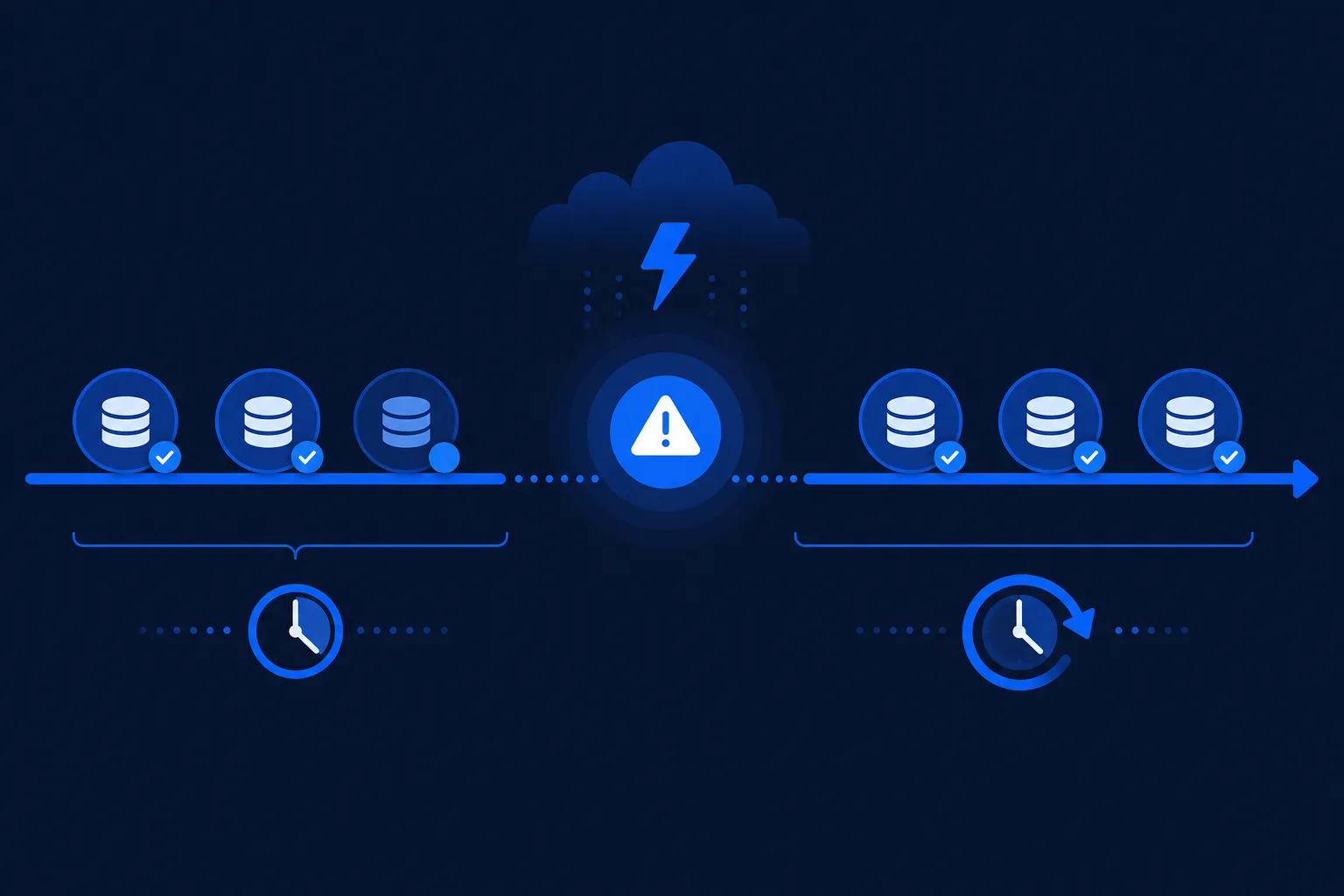
Test restores or you have nothing
The single most common BCDR failure is a backup that cannot be restored: corrupted, incomplete, or missing a dependency. The only way to know a backup works is to restore it. Scheduled test restores turn a checkbox into an actual guarantee.
Building BCDR as a service
For MSPs, BCDR is high value because the stakes are high and the work is recurring. Clients understand the cost of downtime, and a provider who can prove tested recovery earns trust that is hard to displace. The service sells itself the first time a client watches a competitor lose a week to an outage.
Frequently asked questions
What is the difference between backup and disaster recovery?
Backup is a copy of your data. Disaster recovery is the tested plan and infrastructure to resume operations within a defined time. You need both.
What are RTO and RPO?
RTO is the maximum time you can be down before it hurts; RPO is the maximum amount of data, measured in time, you can afford to lose. Together they size your recovery plan.
How often should backups be tested?
Regularly and on a schedule. An untested backup offers no guarantee it will restore when you need it.
Leave a Reply