Business Phone System: How to Choose the Right One in 2026
By The Uptime Report editorial team · Last updated September 2026
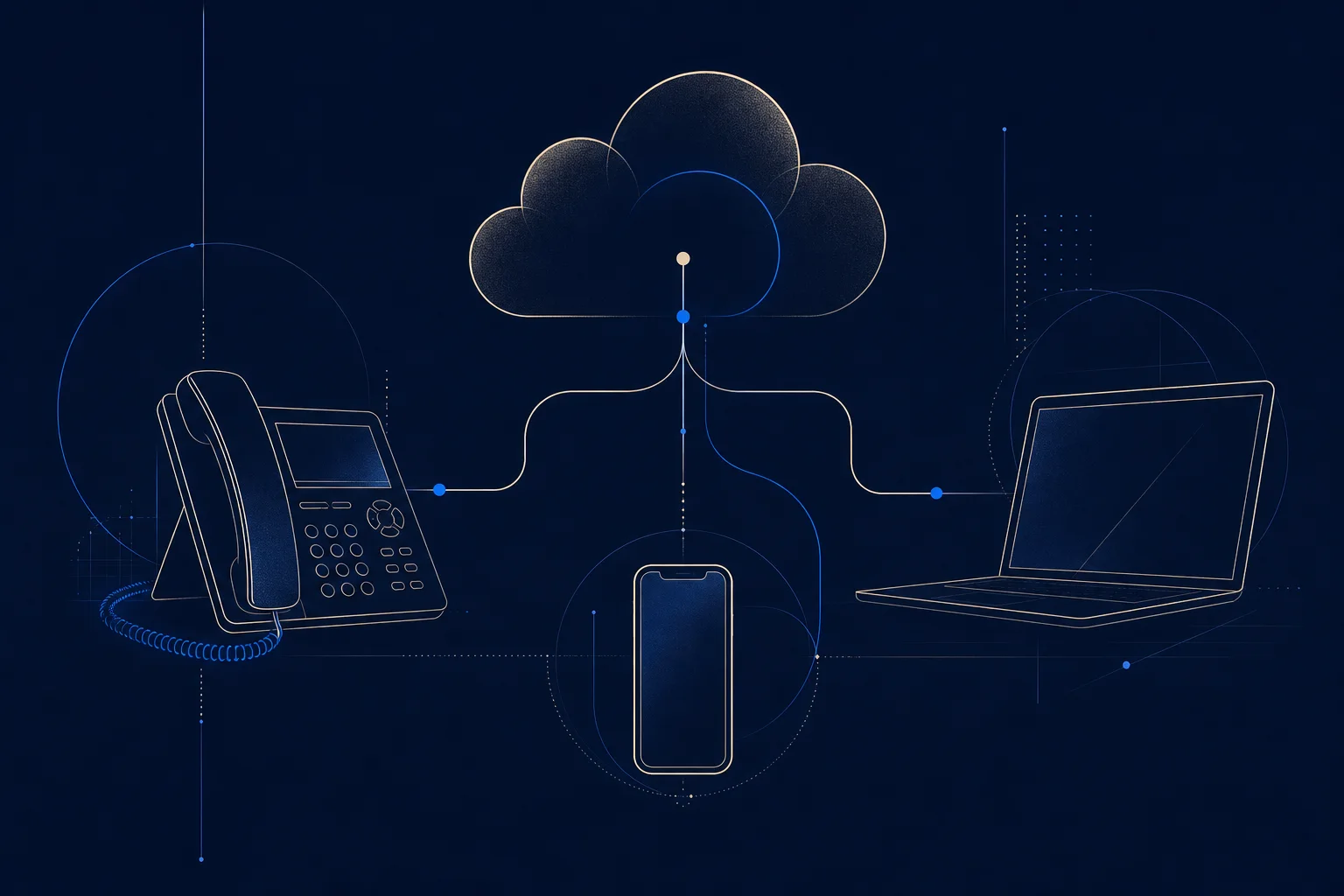
A modern phone system for business runs over the internet rather than copper lines, and the market has decisively moved to the cloud: more than 6 in 10 organizations intend to go fully cloud-based for voice, drawn by lower cost and less maintenance.
Key takeaways
- More than 60% of organizations intend to go fully cloud-based for voice (Kixie, 2026).
- Over 60% of SMBs already rely on business VoIP as their primary voice platform.
- Switching from landlines cuts communication costs 30-50%, up to 68% on usage plans.
- The hosted PBX market is projected to grow from $17.13B in 2026 to $60.26B by 2034.
- Cloud phone systems scale in minutes and include features legacy PBX charges extra for.
What are the types of business phone system?
There are three practical choices. A traditional on-premise PBX uses physical lines and hardware you own and maintain. A cloud phone system (hosted VoIP or UCaaS) runs over the internet with the provider hosting everything. A hybrid keeps some on-premise equipment while adding cloud features. The market has moved decisively toward cloud: Kixie reports more than 60% of organizations intend to go fully cloud-based for voice, and over 60% of SMBs already use business VoIP as their primary platform.
How much does a business phone system cost?
Cloud phone systems are billed per user per month, and the savings over legacy lines are consistent: businesses switching from landlines report 30% to 50% lower communication costs, up to 68% on usage-based plans. On-premise PBX carries higher upfront hardware costs and ongoing maintenance. The hosted PBX market is projected to grow from $17.13 billion in 2026 to $60.26 billion by 2034 as more businesses make the switch, and UCaaS platforms are growing about 15% a year.
| Type | Cost model | Best for |
|---|---|---|
| Cloud / hosted VoIP | Per user, monthly | Most businesses |
| On-premise PBX | Upfront hardware plus maintenance | Specific control or compliance needs |
| Hybrid | Mixed | Phased transitions |
Why are businesses moving phone systems to the cloud?
Cost and simplicity. A cloud phone system scales in minutes, includes routing and mobile apps that legacy PBX charges extra for, and shifts maintenance to the provider. With more than 6 in 10 organizations planning to go fully cloud, on-premise PBX is increasingly reserved for specific control or compliance requirements rather than being the default.
What should you check before choosing a phone system?
Confirm the network can carry voice: bandwidth, low latency, and quality-of-service prioritization decide call quality. Plan a failover for internet outages. Check that the features you need, such as call routing, voicemail-to-email, and mobile apps, are included. If you already work with an MSP, they can run the phone system alongside your network under one accountable vendor.
Frequently asked questions
What is the best type of business phone system?
For most businesses, a cloud (hosted VoIP) system, because it costs less, scales in minutes, and includes features legacy PBX charges extra for. Over 60% of organizations are going fully cloud.
How much does a business phone system cost?
Cloud systems are billed per user per month and cut communication costs 30-50% versus landlines. On-premise PBX carries higher upfront hardware and maintenance costs.
What is the difference between VoIP and PBX?
PBX is the phone-switching system; it can be traditional (on-premise hardware) or cloud-hosted. VoIP is the technology that carries calls over the internet, and most modern cloud PBX is VoIP-based.
Do I need special internet for a business phone system?
You need enough bandwidth with low latency and jitter, plus quality-of-service prioritization for voice. Consistency matters more than raw speed.
Can I keep my business number when switching phone systems?
Yes. Existing numbers can almost always be ported to a new cloud provider, so customers notice no change.
Should my MSP run my phone system?
If an MSP already manages your network, having them run voice too gives you one accountable vendor and the same monitoring and support for both.
Leave a Reply