What Is Network Virtualization? A Clear Explanation for IT Teams
By The Uptime Report editorial team · Last updated September 2026
So what is network virtualization? It is technology that abstracts network functions from the physical hardware, so networks can be built, changed, and scaled in software instead of by rewiring. Adoption is now mainstream: over 60% of enterprises are adopting SDN and NFV, the two pillars of network virtualization.
Key takeaways
- Network virtualization moves network functions from hardware into software.
- Over 60% of enterprises are adopting SDN and NFV (Business Research Insights).
- The SDN and NFV market was worth ~$82.65B in 2026, growing ~17% a year.
- NFV cuts network-function deployment from months to days or hours.
- Benefits: lower capital and operating cost, faster changes, and simpler management.
What is network virtualization?
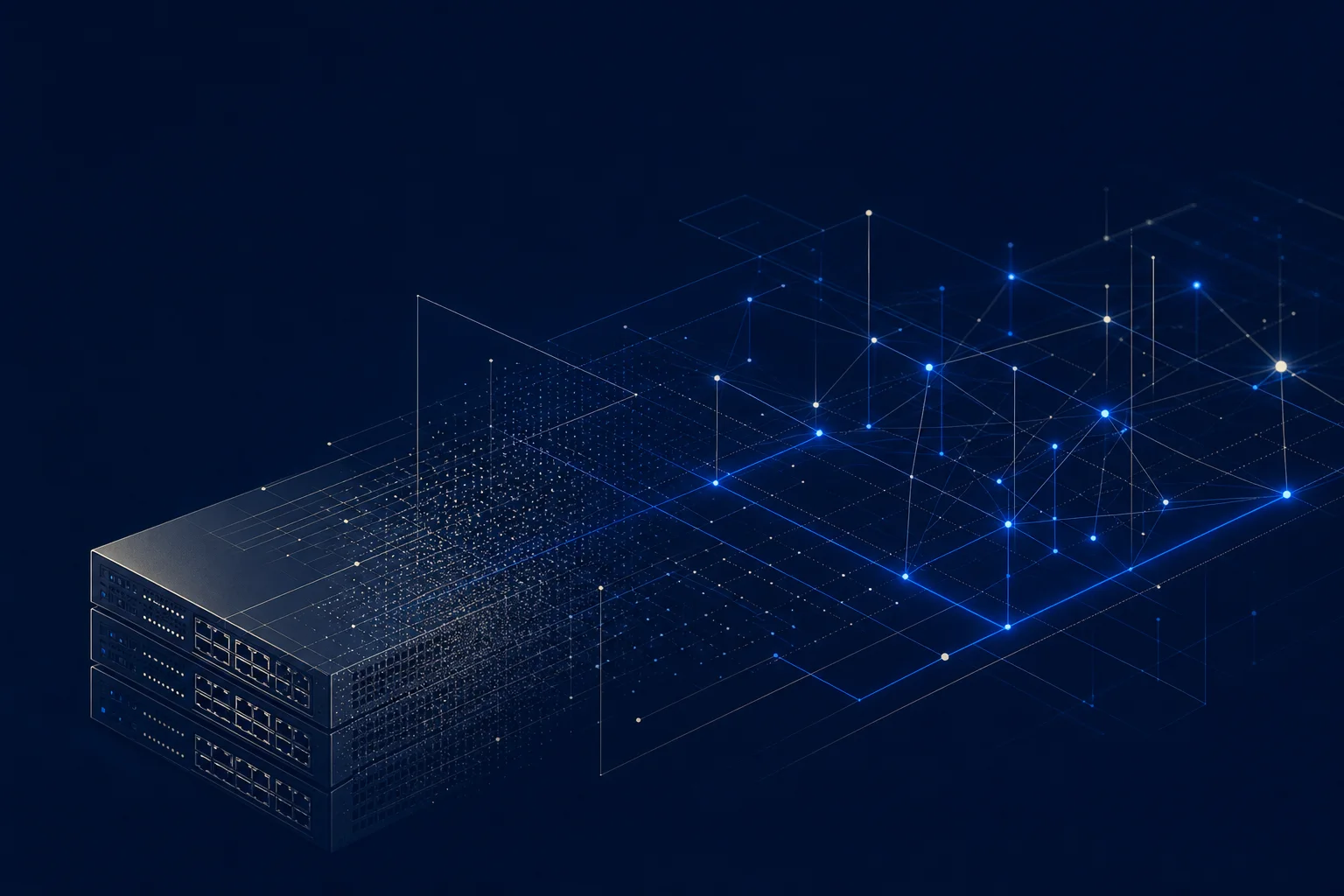
Network virtualization separates network functions from the physical hardware that traditionally ran them. Instead of configuring and rewiring physical routers, switches, and firewalls, you define and change the network in software. This makes networks programmable: they can be built, modified, and scaled the way virtual machines abstracted computing from physical servers.
It is no longer a niche technology. Business Research Insights reports over 60% of enterprises are adopting SDN and NFV, in a market worth about $82.65 billion in 2026 and growing around 17% a year. Market.us tracks the NFV segment growing even faster at over 22% annually.
How do SDN and NFV work?
Two technologies make network virtualization real. Software-Defined Networking (SDN) separates the network’s control logic from the hardware that forwards traffic, so the network is managed centrally in software. Network Functions Virtualization (NFV) runs network functions like firewalls and load balancers as software instead of dedicated appliances. Together they let you instantiate, change, and retire network functions without touching physical hardware.
Why does network virtualization matter for IT teams?
- Speed: NFV cuts network-function deployment from months to days or even hours.
- Cost: fewer physical appliances lowers both capital and operating expense.
- Agility: changes are software configuration, not site visits and rewiring.
- Simplicity: central management replaces device-by-device configuration.
Where is network virtualization used?
It underpins modern data centers, cloud infrastructure, and increasingly the managed networks MSPs run for clients. Any environment that needs to provision or reconfigure networks quickly benefits, which is why adoption crossed the majority mark. For a managed provider, network virtualization is what makes it practical to deliver consistent, quickly changeable networks across many clients.
Frequently asked questions
What is network virtualization?
It is technology that abstracts network functions from physical hardware, letting networks be defined and changed in software rather than by rewiring devices.
What is the difference between SDN and NFV?
SDN separates network control logic from forwarding hardware for central software management; NFV runs network functions like firewalls as software instead of dedicated appliances.
Why is network virtualization important?
It cuts cost, speeds changes from months to hours, and simplifies management by replacing device-by-device configuration with central software control.
How widely is network virtualization used?
Over 60% of enterprises are adopting SDN and NFV, in a market worth about $82.65 billion in 2026, per Business Research Insights.
Is network virtualization the same as server virtualization?
No. Server virtualization abstracts computing from physical servers; network virtualization does the same for network functions. They are complementary.
Do managed service providers use network virtualization?
Increasingly yes. It lets an MSP provision and reconfigure client networks quickly and consistently across many environments.
Leave a Reply