Data Virtualization: Accessing Data Without Moving It
By The Uptime Report editorial team · Last updated October 2026
Data virtualization lets you access and query data from many sources as if it were in one place, without physically copying or moving it. It gives a unified, real-time view across databases, clouds, and applications through a single virtual layer.
Key takeaways
- Data virtualization provides a unified view of data without moving or copying it.
- It queries multiple sources in real time through one virtual layer.
- It differs from ETL and warehouses, which physically consolidate data.
- Benefits: faster access, less duplication, real-time data, lower storage cost.
- It complements rather than replaces data warehouses for many use cases.
What is data virtualization?
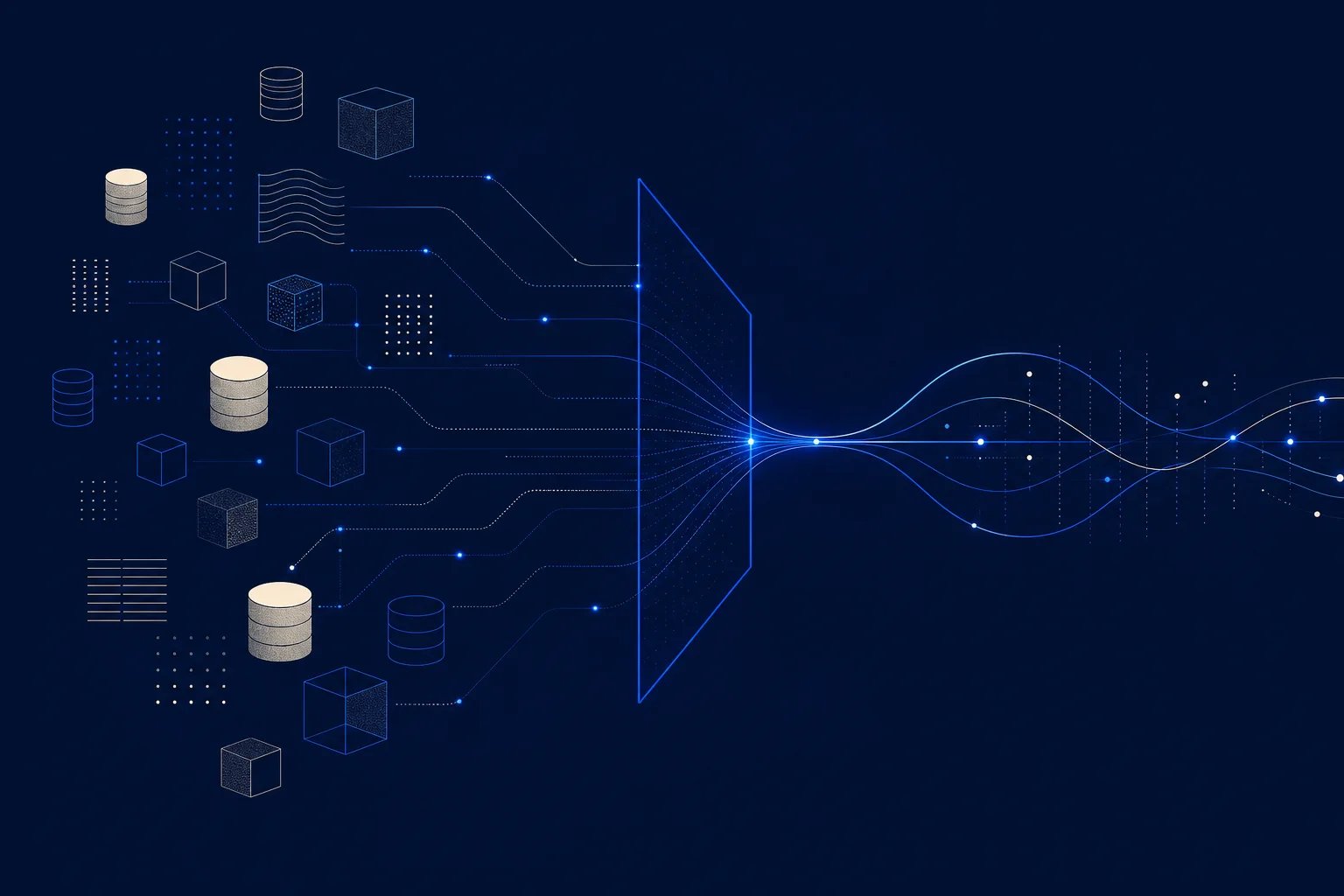
Data virtualization is a data-integration approach that lets applications and users access data from multiple, disparate sources, databases, cloud services, files, and applications, as if it were a single source, without physically moving or copying it. A virtual layer sits between the data consumers and the sources, translating queries and delivering a unified, real-time view (see the IBM overview). The data stays where it lives; the virtualization layer makes it look consolidated.
How does data virtualization differ from ETL and data warehouses?
| Data virtualization | ETL / warehouse | |
|---|---|---|
| Data movement | None; accessed in place | Physically copied and consolidated |
| Freshness | Real-time | As of last load |
| Storage | Minimal duplication | Duplicate storage |
| Setup | Faster to stand up | Heavier pipeline |
Traditional ETL extracts, transforms, and loads data into a warehouse, a physical copy. Data virtualization leaves the data in place and queries it live.
What are the benefits of data virtualization?
- Real-time access: query live data, not a stale copy.
- Less duplication: no second physical store to maintain.
- Faster delivery: stand up a unified view without building pipelines.
- Lower storage cost: avoid copying large datasets.
When should you use data virtualization?
It fits scenarios needing a unified, real-time view across scattered sources: analytics that must reflect current data, integrating cloud and on-premise systems, or giving users one access point without a full warehouse project. It does not replace warehouses for every case, heavy historical analytics and complex transformations still favor physical consolidation, but it complements them, often serving as the fast, flexible layer on top (Denodo explains the pattern).
Frequently asked questions
What is data virtualization?
A data-integration approach that lets you access and query data from many sources as a single view in real time, without physically moving or copying it.
How is data virtualization different from ETL?
ETL physically extracts, transforms, and loads data into a warehouse; data virtualization leaves data in place and queries it live through a virtual layer.
Does data virtualization replace a data warehouse?
Not usually. It complements warehouses, serving as a fast, real-time layer, while warehouses remain better for heavy historical analytics and complex transformations.
What are the benefits of data virtualization?
Real-time access to live data, less duplication, faster delivery without building pipelines, and lower storage cost.
When should you use data virtualization?
When you need a unified, real-time view across scattered sources, such as analytics on current data or integrating cloud and on-premise systems.
Is data virtualization the same as server virtualization?
No. Server virtualization abstracts computing hardware; data virtualization abstracts data access across sources. They are unrelated concepts.
Leave a Reply