Security vs Compliance: Why You Need Both and How They Differ
By The Uptime Report editorial team · Last updated October 2026
Security vs compliance is the difference between being protected and proving you meet a standard. They overlap but are not the same: you can pass an audit and still be breached, which is why 64.5% of companies found unsecured devices they thought were covered.
Key takeaways
- Security is actual protection; compliance is proving you meet a standard.
- 64.5% of companies found unsecured devices they believed were covered.
- Only 47.6% of organizations maintain sustainable security capability.
- 64% of teams say security frameworks feel like security theater.
- Non-compliance adds an average of $201,112 to the cost of a breach.
What is the difference between security and compliance?
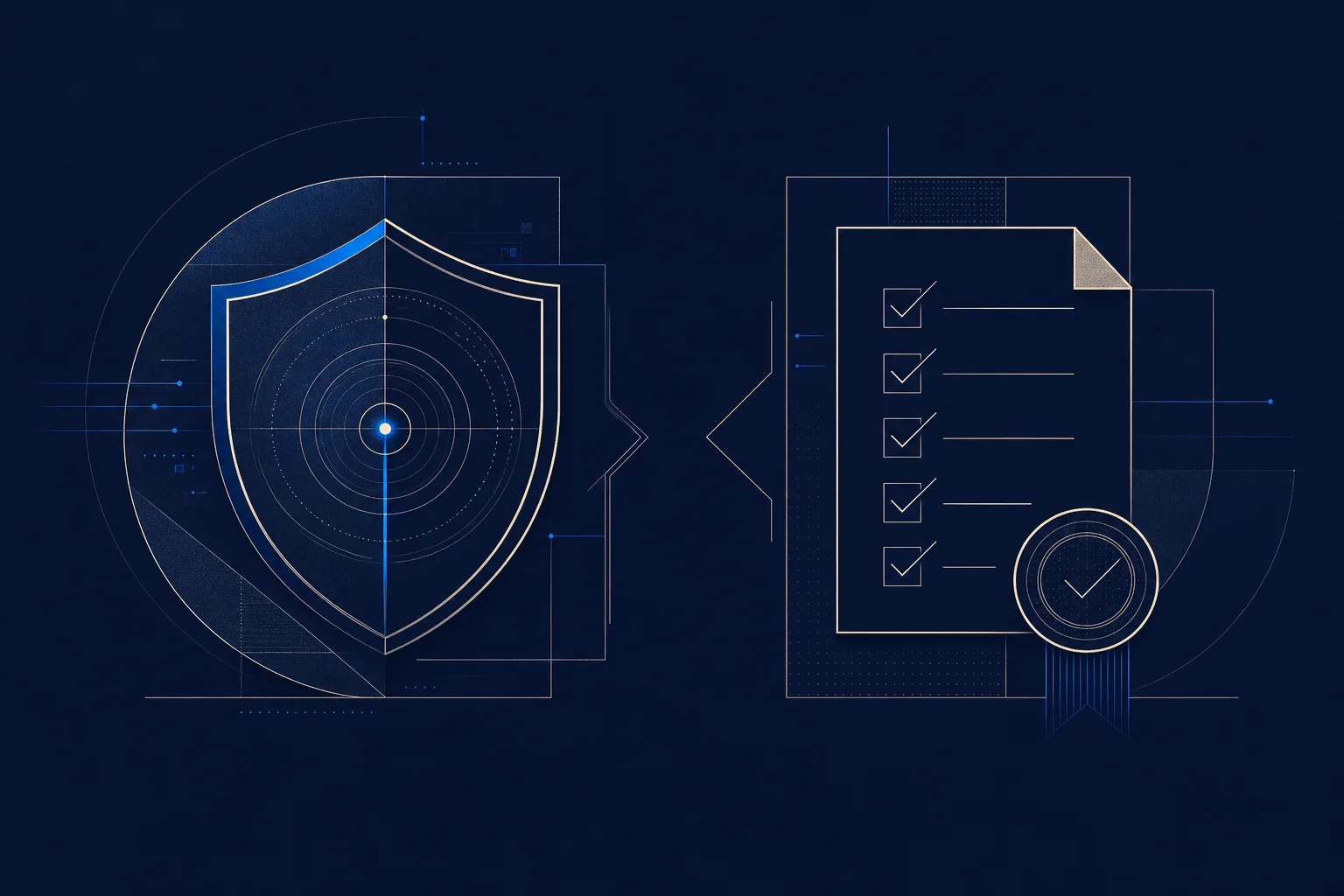
Security is the actual protection of your systems and data: firewalls that work, access that is controlled, threats that get stopped. Compliance is proving your controls meet a defined standard, a framework, a regulation, or a customer contract. The two overlap, but one does not guarantee the other. You can be compliant on paper and insecure in practice, and vice versa.
Why is being compliant not the same as being secure?
Because compliance is a point-in-time snapshot and security is continuous. A control that passed the audit can drift or fail the next week. Deepstrike reports that 64.5% of companies discovered unsecured devices they thought were covered, and only 47.6% maintain sustainable security capability. “Passed the audit” and “still protected six months later” are different claims.
Why does the distinction matter?
| Security | Compliance | |
|---|---|---|
| Goal | Actual protection | Proving you meet a standard |
| Timeframe | Continuous | Point-in-time |
| Failure mode | Breach | Audit finding / fine |
Chasing compliance alone creates a false sense of safety: 64% of teams say frameworks feel like security theater, and 61% spend more time proving security than improving it.
How do you get both security and compliance?
Treat compliance as a floor, not a ceiling. Build genuine security, continuous monitoring, tested controls, real incident response, and let compliance evidence flow from it. The organizations that do both avoid the trap of a clean audit and a real breach. Non-compliance adds an average of $201,112 to breach costs, so neither can be neglected, but security has to come first (Bright Defense tracks compliance statistics).
Frequently asked questions
What is the difference between security and compliance?
Security is the actual protection of systems and data; compliance is proving your controls meet a defined standard. One does not guarantee the other.
Can you be compliant but not secure?
Yes. Compliance is a point-in-time snapshot; 64.5% of companies found unsecured devices they thought were covered. Passing an audit does not mean you are protected.
Can you be secure but not compliant?
Yes. You can have strong protection without the documentation a framework requires, though most mature programs pursue both.
Why does the security vs compliance distinction matter?
Because chasing compliance alone creates false confidence. 64% of teams say frameworks feel like security theater while real gaps remain.
Does non-compliance increase breach costs?
Yes. Non-compliance adds an average of $201,112 to the cost of a breach, on top of the security failure itself.
How do you achieve both security and compliance?
Treat compliance as a floor: build genuine, continuously monitored security and let compliance evidence flow from it.
Leave a Reply