IT Helpdesk: How to Run One That Keeps Users Productive
By The Uptime Report editorial team · Last updated September 2026
An IT helpdesk is the front line of technology support: the team and process that receives, triages, and resolves user issues. It is the single most-outsourced managed service after monitoring, included by 91% of managed service providers.
Key takeaways
- The IT helpdesk is the daily face of a whole IT operation.
- 91% of MSPs include an outsourced helpdesk, second only to monitoring.
- Tiered support (L1/L2/L3) matches issue difficulty to the right skill level.
- First-contact resolution and time-to-resolution predict user satisfaction.
- SLAs set expectations; hitting them consistently builds trust.
What is an IT helpdesk?
An IT helpdesk is the first point of contact when a user has a technology problem: a password reset, an application that will not open, a device that will not connect. It receives the ticket, diagnoses the issue, resolves it or escalates it. For a business, the helpdesk is the part of IT people actually touch every day, which makes it the daily face of the whole operation. It is also among the most-outsourced services: 91% of MSPs offer an outsourced helpdesk.
How does tiered helpdesk support work?
- Tier 1: password resets, common how-to questions, known fixes. High volume, fast turnaround.
- Tier 2: deeper troubleshooting, configuration issues, more context needed.
- Tier 3: complex or systemic issues, often involving engineers or vendors.
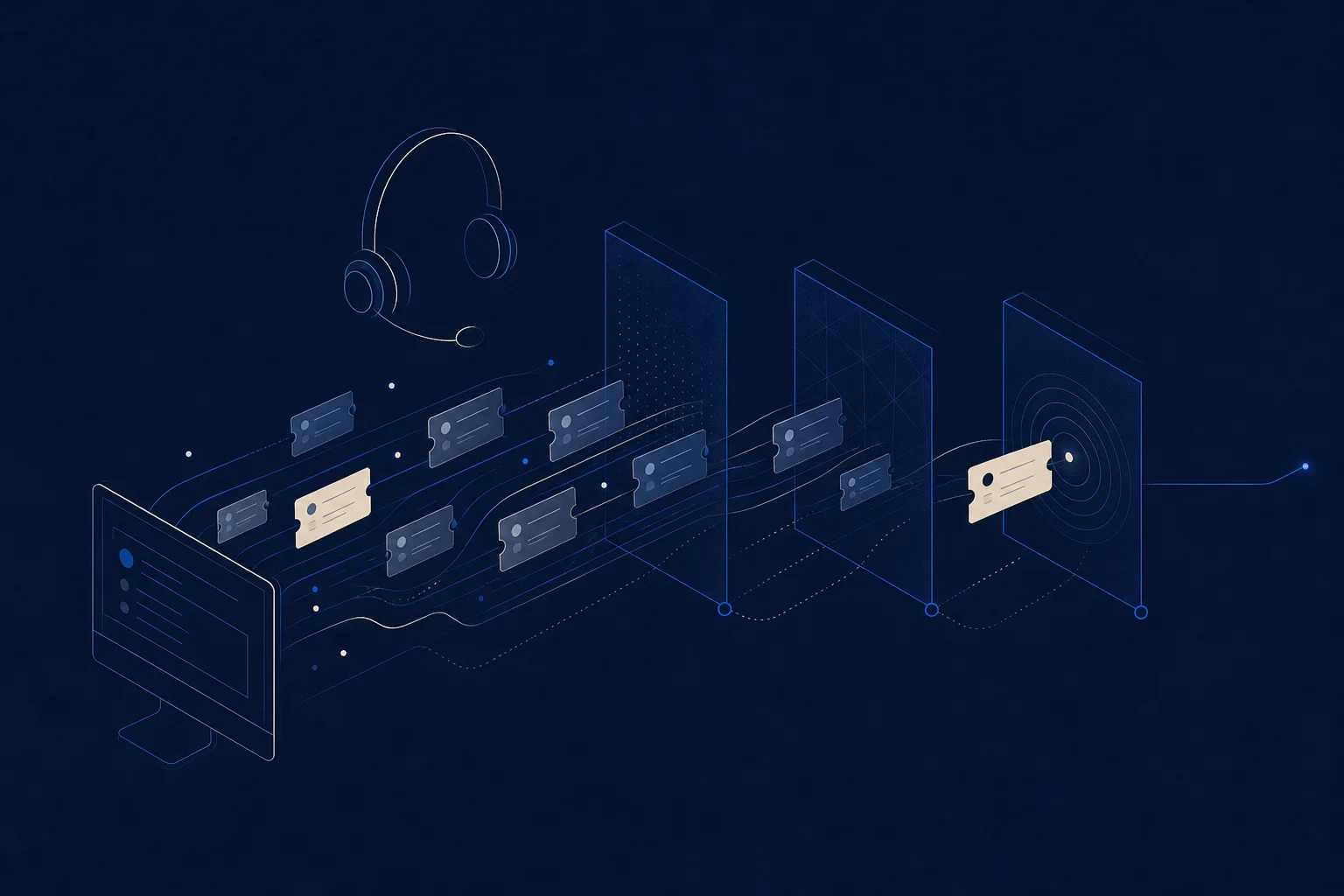
Tiering keeps expensive engineers off routine tickets while ensuring hard problems reach the right people quickly.
Which helpdesk metrics matter?
| Metric | What it tells you |
|---|---|
| First-contact resolution | How often issues are solved on the first touch |
| Time to resolution | How long users wait to be made whole |
| Ticket backlog | Whether the desk keeps pace with demand |
| CSAT | Whether users feel taken care of |
Watch these together; optimizing one in isolation, like speed at the expense of satisfaction, is a bad trade.
How do MSPs run a helpdesk to SLA?
An SLA is a promise: this priority of issue gets a response in this many minutes and a resolution in this many hours. The discipline is setting numbers the staffing can actually support and then meeting them every time. A realistic SLA that is always met builds more trust than an aggressive one that is missed. Good documentation and clean tiering are what make consistent SLA performance possible (Market.us tracks service adoption).
Frequently asked questions
What is an IT helpdesk?
The first point of contact for technology support, receiving, diagnosing, resolving, and escalating user issues like password resets and application problems.
What is the difference between a helpdesk and a service desk?
A helpdesk focuses on fixing user issues; a service desk is broader, managing incidents, requests, and changes as the single point of contact for IT.
How does tiered helpdesk support work?
Tier 1 handles routine issues, Tier 2 deeper troubleshooting, and Tier 3 complex or systemic problems, matching difficulty to skill level.
What helpdesk metrics matter most?
First-contact resolution, time to resolution, ticket backlog, and customer satisfaction, watched together rather than in isolation.
Do MSPs provide helpdesk services?
Yes. 91% of MSPs offer an outsourced helpdesk, making it one of the most common managed services.
What is a helpdesk SLA?
A service-level agreement defining response and resolution times by issue priority. Meeting it consistently is what builds user trust.
Leave a Reply